Private instruction · in-person & online

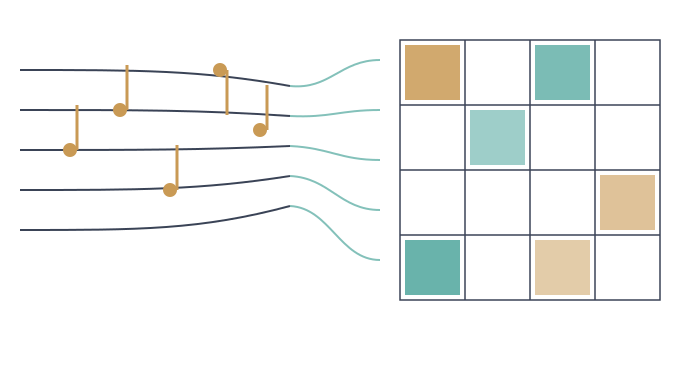
Every instrument starts on the same page — however you plan to play it.

Voice, guitar, bass, ukulele, synths, drum machines, and the DAW — taught as one connected language of pitch, rhythm, and sound, not seven unrelated hobbies.

What's taught

One studio, seven instruments, one set of foundations.

Voice

Voice

Strings

Guitar — Electric & Acoustic

Strings

Bass

Strings

Ukulele

Electronic

Synthesizers

Electronic

Drum Machines

Production

DAWs & Recording

Foundations

Theory & Composition

The short version

Three ideas the whole studio is built on.

Read the full approach

01 / Ear before notation

You learn to hear it first

Every concept — a chord, a groove, a patch — gets identified by ear before it gets a name or a diagram. Notation explains what you already recognize; it doesn't replace recognizing it.

02 / One theory, every instrument

The same grammar, different accents

A guitar chord shape, a bassline, a synth arpeggio, and a chord progression in a DAW are the same handful of ideas wearing different clothes. We build the grammar once and reuse it everywhere.

03 / Make something real

Every lesson produces something

A recorded take, a finished loop, a song you can actually play start to finish. Progress you can point to beats progress you have to take my word for.

The e-textbook

Latest from Lessons & Notes

Browse all lessons
Voice·7 min read

Breath Support: The Foundation of Tone

Before pitch, before style — the single habit that determines how every other vocal skill develops.

Read the lesson →
Guitar / Bass / Ukulele·6 min read

Reading Chord Diagrams Across Fretted Instruments

One diagram system, four instruments. How to stop relearning the same shape from scratch each time.

Read the lesson →
DAWs·8 min read

Signal Flow: How Audio Moves Through Your DAW

Track, bus, master — the plumbing behind every recording, and why it matters before you touch a plugin.

Read the lesson →